A team of religious brothers from the Don Bosco Philosopate, Mariapuram, Warangal, who are currently pursuing their studies in philosophy, visited PARA for a week-long – from 10th to 18th October social exposure program. The purpose of this visit was to help them gain practical insight into the lives of marginalized communities and to understand the ground-level realities of social development work. This exposure also aimed to deepen their appreciation for human rights, social justice, and the principles that guide community empowerment.
The program began with an orientation session conducted by PARA’s team. During this session, the participants were introduced to a variety of important themes, including human rights, child rights, gender equality, rights of persons with disabilities, the Mahatma Gandhi National Rural Employment Guarantee Act (MGNREGA), the Scheduled Castes and Scheduled Tribes (Prevention of Atrocities) Act, and constitutional values. These sessions provided the brothers with a broad understanding of the frameworks and legal protections that guide social action in India.
After the orientation, the brothers were divided into four groups and placed under the guidance of PARA’s block coordinators. Each group was assigned to a different operational area for field exposure. The four blocks covered were Alamuru under the leadership of Durga, Atreyapuram led by Prabhakar Rao, Ravulapalem guided by Raja Rao, and Kothapeta coordinated by Isaiah. Through these placements, the brothers had the opportunity to engage directly with local communities and gain hands-on experience in social fieldwork.
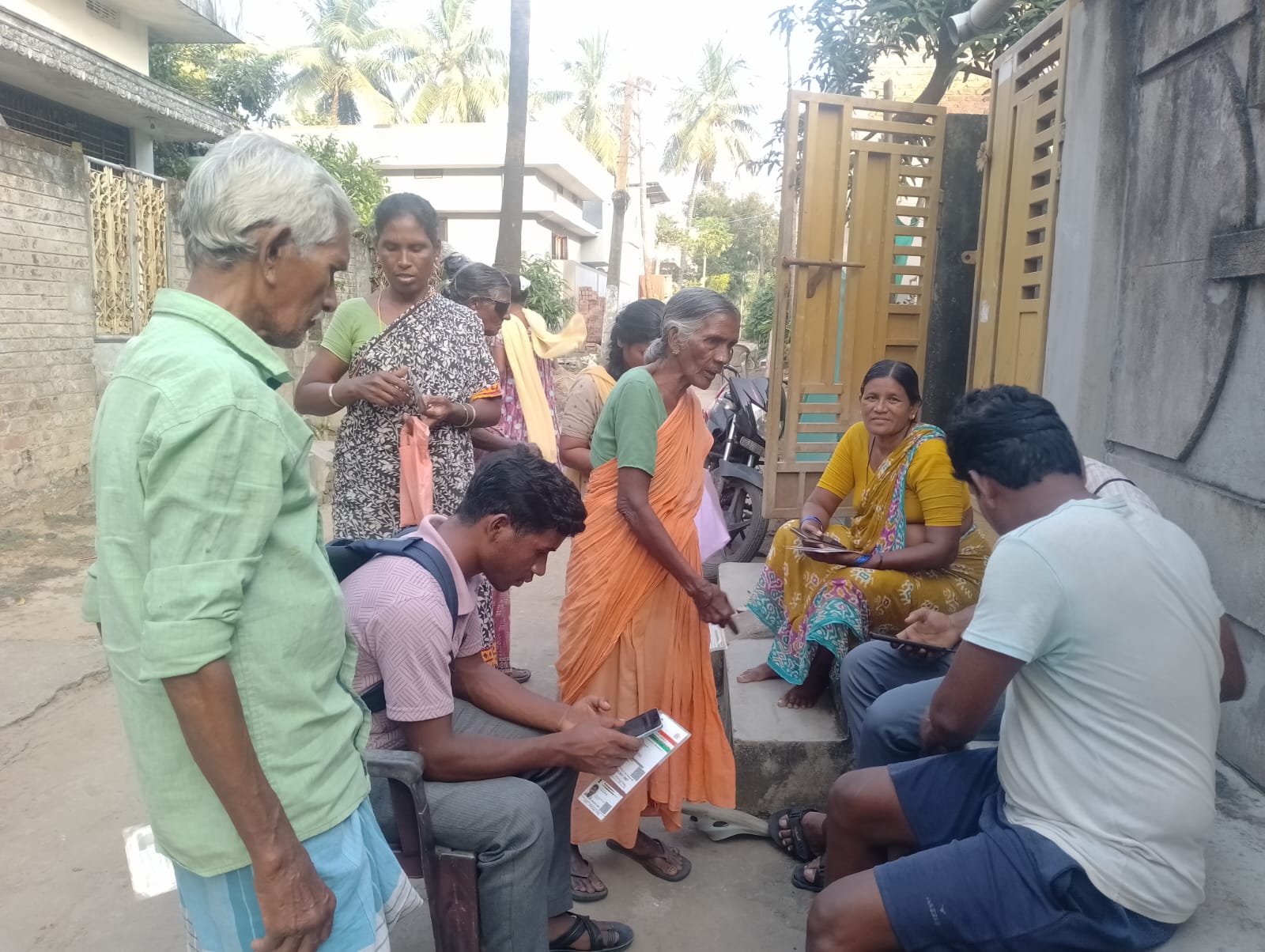
During the exposure visits, the participants visited several villages within their respective blocks, with a particular focus on brick kilns where child labor and migrant labor are prevalent. They conducted surveys on child labor and migrant workers to better understand their living and working conditions. In addition to the surveys, the brothers actively supported the e-Shram registration of laborers, which would help workers in villages and brick kilns to access social security benefits. Towards the evening, the teams also visited village committees to learn about their structure, activities, and role in promoting local governance and community participation.
On the 18th, they travelled to Ekalavya Children’s Home (ECH), where they, along with wider civil society they participated in a workshop to understand the struggle to safeguard the values enshrined in the Indian Constitution. In the evening, they had an opportunity to interact with the inmates of ECH. The following day, the 19th, they left for their Philosophate.
The program proved to be a deeply enriching experience for the participants. It provided them with first-hand exposure to the struggles and resilience of marginalized groups, helping them develop a greater sense of empathy and commitment to social justice. The brothers also gained valuable knowledge about participatory approaches to development, rights-based advocacy, and the importance of community organization in bringing about lasting social change.